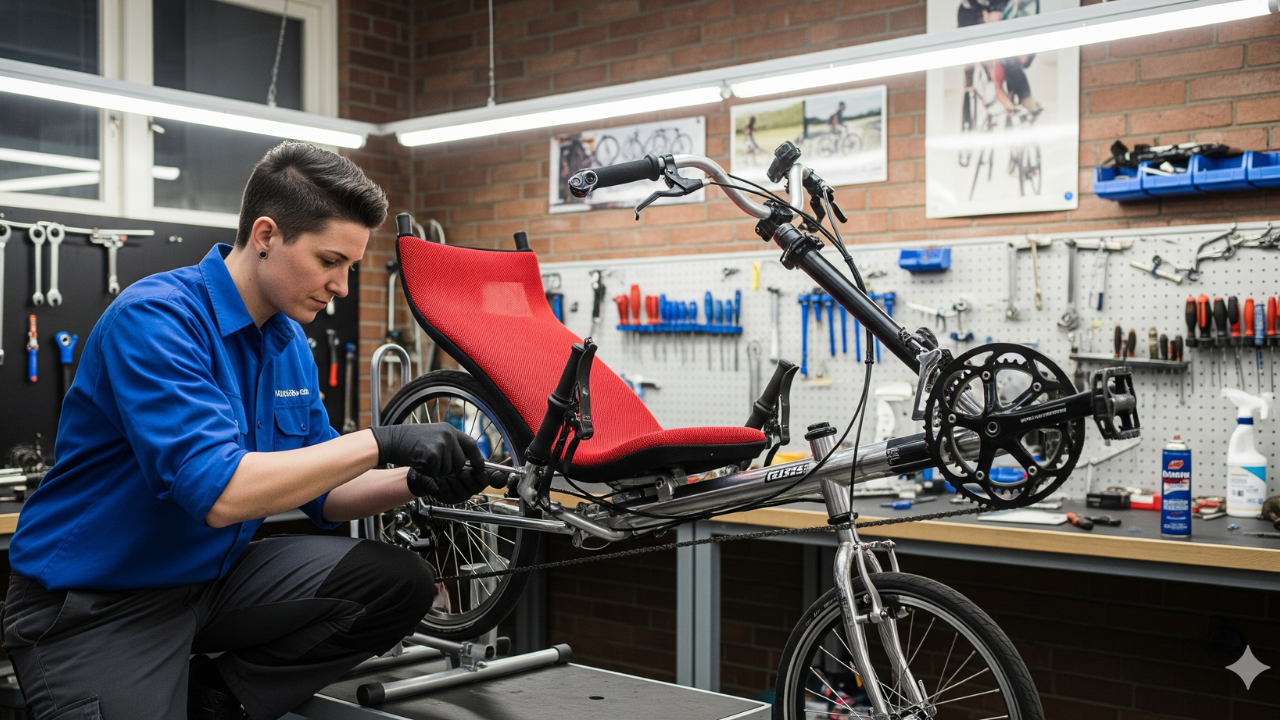

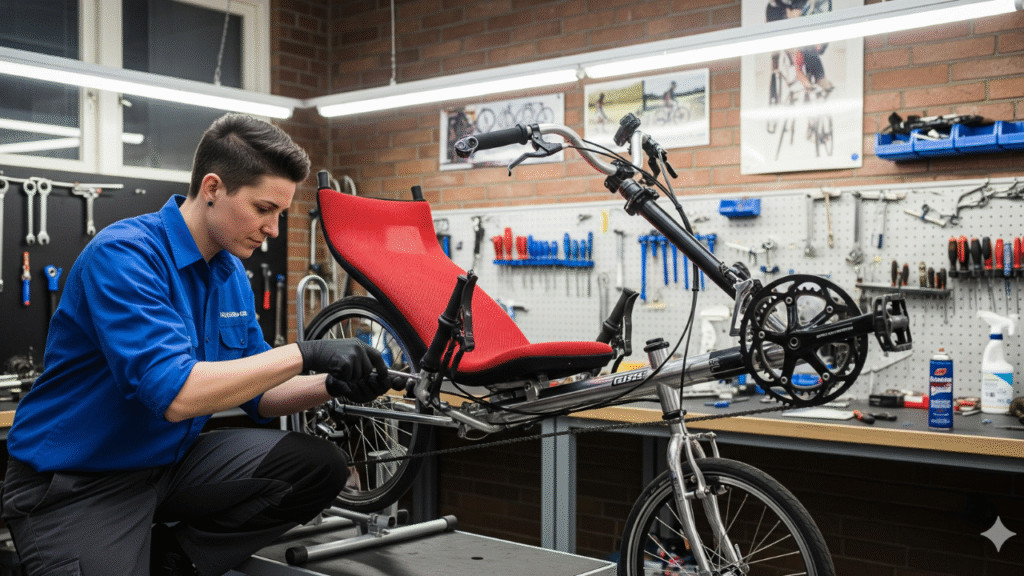
Professional Tips to Keep Your Recumbent Bike in Top Shape
Recumbent bikes are great for comfort and steady workouts, but like any fitness equipment, they work best when maintained well. Here are five professional tips that help ensure yours stays smooth, safe, and long-lasting.
Lubricate Moving Parts Regularly for Smooth Movement
Friction is the enemy of smooth operation. The pedals, crank arms, and any joints or sliders on a recumbent bike need regular lubrication. Use bike-safe or machine-recommended lubricant. After applying, wipe off excess, so dirt or dust doesn’t stick. This simple step reduces wear and noise and keeps each motion feeling smooth.
Tighten Seat Rails and Pedals to Avoid Wobbling
Because recumbent bikes put more weight on seat rails and pedals, loose bolts or fasteners here can lead to wobble, looseness, or even unsafe movement. Every few weeks, check the seat rails—ensure they slide correctly and are locked firmly. Also inspect the pedals and crank bolts. Tighten with the right tools, but be careful not to over-tighten, which can damage threads.
Inspect Belts and Resistance Mechanisms Administering Wear
Recumbent bikes often use belts, magnetic or mechanical resistance systems. These parts endure a lot of load. Check the resistance mechanism: if resistance feels weaker than usual, or if the belt is frayed/cracked, it may need replacement or adjustment. Clean around resistance components so dust doesn’t degrade performance. A well-working resistance system keeps your workouts effective and your machine healthier.
Clean Console and Sensors to Prevent Malfunctions
The console display and sensors control feedback like distance, speed, and resistance. Sweat, dust, or grime buildup can cause them to misread or stop working. Gently wipe the console, sensors, and wiring with a soft cloth. Avoid using harsh chemicals. Make sure the bike is off before cleaning. Regular cleaning helps avoid glitchy readings or display issues.
Check Frame Joints for Cracks or Stress Marks
Due to the recumbent position and different frame design, frame joints and welds take distinct stresses. Regularly inspect these areas—especially where the seat attaches or where the frame bends. If you see cracks, dents, or stress marks, get them evaluated by a professional. Early detection of structural issues can prevent more serious damage.
Adjust Seat Position Correctly to Reduce Strain
A recumbent bike’s seat and backrest should support your body well. If the seat is too far back or too low, your legs may overextend; too forward or too high, your knees might be strained. Take time to adjust the seat and backrest so that when you pedal, your knees stay slightly bent at full extension. This helps avoid discomfort and reduces wear on the seat rails, crank arms, and bearings over time.
Monitor Noise Levels—Address Squeaks and Rattles Early
Unusual sounds like squeaks, rattles, or grinding are early warning signs that something is off. These noises often come from loose bolts, worn bearings, misaligned parts, or insufficient lubrication. When you hear them, take a moment to locate the source—tighten loose bolts, lubricate moving joints, and inspect bearings. Catching these small issues early helps prevent large breakdowns.
Test Electrical Components and Wiring Safely
Many recumbent bikes include consoles, sensors, wires, and sometimes power adapters. These components are often tucked in weird spots—under the seat, inside the frame, or along rails—and may get exposed to sweat or moisture. Inspect cables and connectors for wear, ensure wires are securely fastened and not pinched, and check that displays and sensors work correctly. Safety is key: always unplug power before inspecting or working on electrical parts.
Replace Worn Parts with Quality Spares
Parts like pedals, crank arms, resistance components, seat rails, and bearings eventually wear out. When they do, replacing them with good-quality spare parts matters. Cheap replacements may save money short-term, but can cause new issues later (loose fit, faster wear, safety risks). Use parts recommended by the manufacturer or good equivalents. This keeps performance high and helps avoid frequent repairs.
Keep a Maintenance Log to Track Service History
It helps a lot to write down when you serviced your bike, what parts you replaced, and what adjustments you made. A simple log (on paper or in a phone note) lets you see patterns—like bearings wearing too fast or seat rails coming loose often. With this history, you can do preventive maintenance more intelligently, possibly avoid costly repairs, and know when professional check-ups might be needed.
Suggested Article: Why Recumbent Bikes Require Special Attention During Repairs
Conclusion
Keeping your recumbent bike in great shape doesn’t need to be difficult. With actions like regular lubrication, tightening loose parts, watching resistance systems, cleaning sensors, and checking frame joints, you’ll enjoy smoother rides, better performance, and longer machine life. For expert repair services or advice, visit https://treadmillrepairbhubaneswar.in/